Brushing Your Dog's Teeth
Good dog dental care for your pet means the end of bad dog teeth, but more importantly, good dental care can really make a long term difference in the overall health of your dog, not just with mouth problems.
Safe Dog Teeth Cleaning!
Clean Tartar From From
Your Dog's Teeth! |
100% Safe and All-Natural
ORDER HERE
 |
Positioning for Easy Brushing of Dog Teeth
In order to properly brush your dog’s teeth, you should allow enough time to do the job properly. If you try to rush through the job, your dog will become stressed, nervous, and less co-operative. First, ask you dog to sit. Hold his muzzle closed with your thumb over the top of his nose and your fingers underneath his muzzle. Keep his mouth shut and gently lift his lip at the side so that his teeth show. Apply a small amount of our pet toothpaste gel to a pet toothbrush. You should not use human toothpaste for several reasons.
* Dogs don't like the froth of human toothpaste.
* Dogs can not be taught to rinse and spit causing most of the toothpaste to be swallowed. This can lead to stomach problems over time.
* Have you ever seen a dog eat a mint? Dogs do not like minty tastes! Dog toothpaste has a malt or poultry taste, which is much preferred over mint.
Work the toothpaste down into the bristles of the toothbrush, otherwise, since it is so tasty, the toothpaste will be eaten up before it can be used to brush the dog’s teeth.
"I have used your product for a week on my dog’s teeth that was covered in hard plaque and last night I was able to, with my fingernail, pluck that hard plaque off of her teeth.
The Vet had recommended putting her to sleep to clean her teeth and my dog has seizures and we did not want to take a chance on her not awakening so we decided to try your product ...really not thinking that it would work.
But it did! Now my dog’s teeth are on their way to being good as new and her breath does not stink anymore, also she act’s like she feels much better just like she is a new dog.
Thanks a lot and we are going to try other products that you offer."
Steve Durham
Liberty, KY |
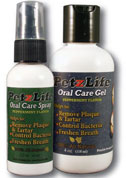
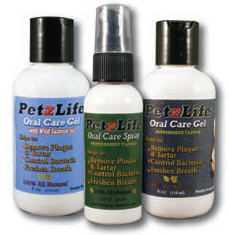
Oral Care For Pets
100% Natural
- Removes Plaque and Tarter Safely
- Kills Germs and Stops Bad Breath
- Heals and Stops Gum Disease
- Great Results in 2 to 3 Weeks
- No Risk of Anesthesia
- Works for Both Cats and Dogs
|
|
Inspect Your Dog's Teeth Regularly
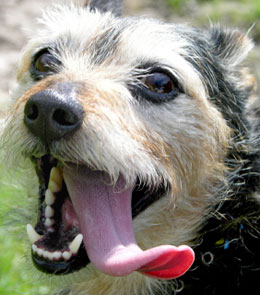
When is the last time you took a close look at your dogs teeth? Just as in people, dental health is an important part of your pet's life and well-being. Buildup of tartar and plaque on canine teeth can lead to gum disease which in turn can cause severe health issues down the road or your pet.
Gum disease in canines is exactly identical in the symptoms, the causes, and the results as it is in humans. As plaque and tartar are allowed to build up on the canine teeth, bacteria now have a very comfortable place to live and reproduce. It's not so much the tartar and the plaque itself that is harmful to the gums. Instead, it is the high populations of bacteria that flourished in this kind of environment in the dog's mouth.
When these high concentrations of bacteria are allowed to multiply and flourish they can lead to gum infections. Of course these infections can lead to bleeding of the gums and also the plaque and tartar are unsightly and can cause bad breath in the dog. However, the real complications with this issue have to do with the fact that there is access to the bloodstream by the flourishing bacteria in the mouth.
When all of these bacteria have access to the bloodstream via the bleeding gums, they can travel to different parts of the body and land in various organs where they can then reproduce. This is the problem that can lead to greater issues in the future for dogs with gum disease. Some of the organs where the bacteria are transported to can become infected as these high populations of bacteria also grow there comfortably.
In nature, the teeth of canines are kept clean because the animals eat a regular supply of raw and uncooked bones. These types of loans are safe for dogs to eat versus cooked bones which are splintering and can lodge in the throat and cause problems for the dog. But this kind of diet is best for keeping teeth clean and free of plaque and tartar. Domesticated dogs rarely eat raw bones and may only chew on some things now and then that will help remove the tartar naturally from their teeth.
Sadly, many pet owners resort to a dangerous and costly procedure called dog teeth scaling which is performed at the veterinarian's office and used to remove the plaque from the teeth. This can be a highly dangerous procedure when done on younger small dogs and also all older canines. Since a general anesthetic is required for this process, it is not advised for older dogs were those who have other health problems.
An alternative to this dangerous procedure is to simply perform daily dog teeth brushing's with all-natural products. Although these gels and sprays do not remove the plaque instantly from the teeth, they will offer very good results when used daily for several weeks for several months. Once the plaque is removed with these products, is then necessary only to brush the dogs teeth several times a week in order to keep the tartar and plaque removed and from building up.
Brushing Dog Teeth
The toothbrush should be positioned so that it slides into the back of the mouth between the gums and the dog’s teeth. Begin brushing at the back of the mouth and move forward to the front of the mouth. Make sure to be gentle so as not to hurt the dog. Once you have finished brushing all dog teeth on one side, repeat this same motion on the other side. You usually do not need to brush the inside face of the teeth as the dog does a good job on his own keeping this area clean with his tongue. Finish the brushing job by cleaning those tiny teeth at the front of the mouth. This may tickle your dog, so it is best to brush these teeth last. If you start in the front and tickle your dog, you may not be able to clean the back teeth without a great deal of struggling and frustration.
Tips to Make Brushing Easier
* Start early! For puppies, examine and clean the dog’s teeth as part of a routine health check. Try to make brushing something fun, just as you would do with your children.
* If you didn’t get started early, it is never too late to start. If you are cleaning an older dog’s teeth for the first time, the dog may be surprised and uncomfortable the first few times you brush. Work up to a full brushing in stages to help your dog gain comfort with your fingers in his mouth. If you try to do a complete brushing the very first time, you are likely to frighten your dog and make any future attempts at brushing the dog’s teeth frustrating for both of you.
* Begin by helping your dog to relax. Examine his teeth and gums without attempting to brush at all. This will allow the dog to become comfortable with your fingers in his mouth.
* The next step is to rub your fingers over the dog’s teeth without a toothbrush. This will get the dog used to the sensation of brushing.
* If your dog is still nervous about having your fingers move over his teeth, try using just your finger before moving onto a regular toothbrush.
* As soon as you and your dog are ready, try the toothbrush!
* Toothpaste should be introduced as soon as you feel your dog is comfortable with the brushing process. You do not need to wait until you are using the toothbrush. If your dog seems to be getting nervous, stop and try again later. Try to make the brushing process as fun as possible for your dog. Keep your routine consistent so your dog knows what to expect next. This will also help make brushing easier on you! Make sure to constantly praise your dog when he is doing a good job of letting you brush. When you are done, award your dog with a tooth friendly treat!
|